
Fear ignorance more than a lion
A story about sustainable work, coaching leadership, and the danger of ignorance
Peculiar title, isn’t it?
Do you also need a moment to reflect before the message sinks in?
I recently heard this sentence on TV. A minister from an Eastern country, where lions are indeed still present, spoke these words in the context of the non-information we are confronted with today:
“Fear ignorance more than a lion.”

Analysis is the mother of the solution
Ignorance is one of the greatest threats to our society and, consequently, to businesses. Ignorance can spread like a creeping poison and disrupt entire organizations. This applies at both strategic and operational levels. A lack of broader knowledge on the work floor regarding the social and corporate situation leads to misunderstandings, resistance, and demotivation. How can decisions be understood when there is no knowledge of the analysis that led to those corporate decisions? This applies to politics, but also to many a corporate policy. Analysis is the mother of the solution.
In the years I have spent studying the development of “sustainable work” and the conditions for successful “Coaching Leadership,” I have found that involving, informing, and training the employees concerned is a fundamental part of the process. You only get equal conversational partners at the table when everyone has access to the same information and understands it. Because ‘participation without insight is a statement without a future’ – without sufficient knowledge, opinions are often hollow and do not lead to real progress, but rather to polarization.
The consequences of ignorance in companies
Every year, executives and middle management, who represent only 5 to 10% of the workforce, collectively spend hundreds of hours drafting business plans. This process takes two to three months or more and involves analyses, discussions, and strategic choices. The conclusions of this in-depth work and the resulting actions are then presented to the staff in just one or two hours, with the expectation that everyone will immediately and enthusiastically support the plan and the new objectives.
But if an employee could understand the entire plan, grasp the impact of the facts, and immediately know how to apply this plan in practice within two hours, why isn’t that person sitting in the CEO’s chair?
This approach is simply unrealistic. A strategic plan cannot be imposed top-down without broad understanding and support within the organization. Employees must be involved in the analysis of the problems and the search for solutions. Only then does true engagement and ownership arise, which is essential for successful implementation.
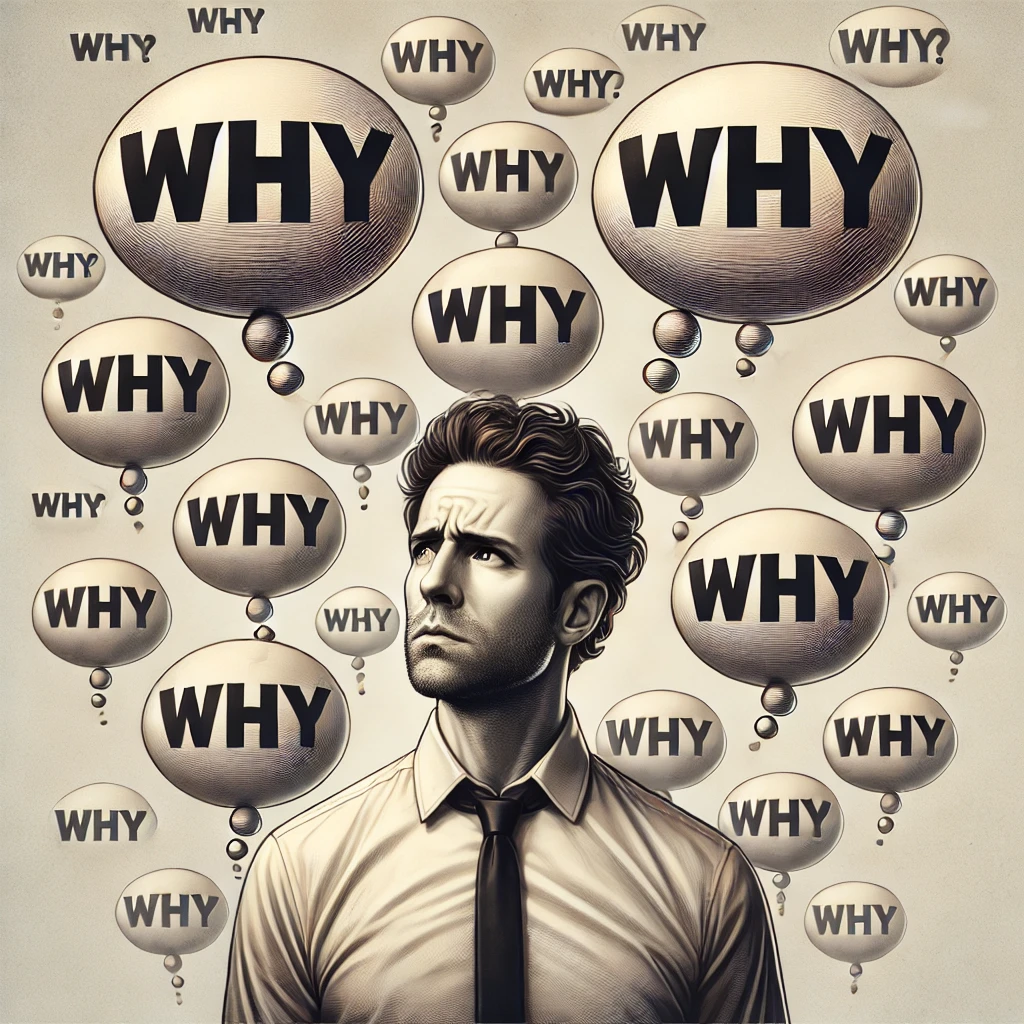
When employees do not understand why decisions are made, the distance between management and staff grows. This leads to demotivation, resistance, and even the sabotage of changes. Transparency and education within organizations are therefore crucial. By involving employees step-by-step in the thought process and making them active participants in the challenges the organization faces, misunderstandings and frustrations can be prevented.
A well-informed employee is an engaged employee—someone who does not merely react to symptoms but understands the causes and actively contributes to solutions.
The dangers of ignorance in politics and society
Ignorance is not only a risk within companies but also at a societal level. A poorly informed population becomes an easy target for populism and deception. We know today that “fake news” is deliberately used to spread misinformation and pit population groups against each other. This can lead to polarization, chaos, and even uprisings.
An informed society is essential for a healthy democracy. People must learn to think critically, verify sources, and arm themselves against manipulation. This is not a luxury, but an absolute necessity to maintain a stable and prosperous society. Here too, the following applies: ‘Participation without insight is a statement without a future.’ Those who criticize or support political decisions without factual knowledge contribute to ill-considered policy choices and an unstable society. But why don’t we invest more time in informing people about the facts?
From sustainable work to productive self-direction: the role of Coaching Leadership
In this complex and rapidly evolving work environment, developing sustainable work is essential to increase both engagement and productivity. When employees understand the broader context, they can make the right decisions autonomously and purposefully.
This requires a shift from traditional management to coaching leadership, where managers no longer focus on control, but on growth and development.
Coaching leaders create a clear vision and spend their time facilitating their teams, so that employees feel competent, trust themselves, and can operate in a self-directed manner. This stimulates intrinsic motivation and increases the resilience of the organization. By investing in a culture where learning, ownership, and trust are central, a dynamic balance between sustainability and performance orientation is created. In this way, organizations transform from hierarchical structures into adaptive networks where employees and leaders grow together to a higher level.
The special role of education, training & coaching in prosperity and stability
One of the reasons that some societies are successful lies largely in the quality and accessibility of their education. Young people spend a significant part of their lives—often until age 18 to 22—in schooling; this is nearly one-third of their active life. Reflect on this for a moment: apparently, this much time is needed to enable young people to function in our current society. And it doesn’t stop there.
This approach forms the basis of a strong economy and a stable society where there is room to disagree and where agreements are found together. We know that continuous self-development is indispensable to handle the challenges of a rapidly changing world. Those who do not continue to develop will struggle to adapt to new realities. Innovation, technology, and globalization constantly bring new challenges, and without continuous knowledge development, people fall behind. This has consequences not only for the individual but for society as a whole. And that certainly applies to your company as well. And here is another misunderstanding: people are not against change at all, but they are against the disadvantages that the change will bring. So, remove those disadvantages in advance, inform and involve, and resistance will be prevented.

May I ask you a few questions?
- How is the flow of information, both bottom-up and top-down, in your organization?
- How far are you from the leadership challenge of “Coaching Leadership”?
- How “operationally” involved are your managers today?
- How much—or perhaps better phrased, how little—time do they effectively spend helping people grow toward self-organization and self-direction?
Conclusion: ignorance is not an option, modern leadership as a catalyst for growth
Ignorance is a danger that must not be underestimated. It undermines companies, threatens democracies, weakens economies, and hinders progress.
Transparency, education, and critical thinking skills are the keys to a resilient and progressive society.
In companies, this means that employees should not simply be informed, but must be actively involved in strategy and decision-making.
Engagement only arises when employees are given the space to contribute their thoughts and participate in strategic decisions. Only in this way can organizations and societies face the challenges of the future with confidence.
This presents a new responsibility for leaders: they must educate, train, and coach their teams to act independently. Coaching leadership means investing in the development of employees, informing them, helping them to understand complex challenges, and guiding them toward greater autonomy and responsibility. When managers embrace their role as mentors and facilitators, a culture is created in which employees feel connected to the organization and actively contribute to innovation and sustainable growth. In this way, companies not only build their own future but also contribute to a resilient and agile economy.
Let’s hope that politics understands this as well.
Erik Houben, Managing Partner 4Result, 2025