
Organization & culture

Seeing what drives your organization today

Culture is not read from the values on the website. You see it in what happens when someone makes a mistake. In who speaks during a meeting and who remains silent. In which figures are discussed on Monday morning and which never are.

Every organization has a culture. The question is whether it helps to achieve what you want to achieve.

Do you recognize this?

If you recognize a few sentences here, the problem is rarely with a single team or a single manager. It lies in the way the organization works, decides, and rewards.

Why we focus on culture

What an organization rewards determines what sticks after training

01

A recurring pattern

We have been working on leadership, teams, and sales for over 25 years. Time and again we see the same thing: people learn something new in a training session, they want to apply it, and then they clash with their environment.

02

Where the friction lies

A manager who wants to work as a coach but is only evaluated on short-term KPIs. An employee who wants to take responsibility but notices that mistakes are punished.

03

That is why we look at culture first

For larger questions, we start with what an organization rewards, tolerates, and models. This determines what remains in place after a training session.

About the Laloux model

In Reinventing Organizations, Frederic Laloux describes five ways organizations operate, each represented by a color.

  • Red stands for strong, personal leadership and fast decisions.
  • Amber for stability, procedures, and clear hierarchy.
  • Orange for goals, performance, and innovation.
  • Green for values, engagement, and participation.
  • Teal for self-management and a shared purpose that gives everyone direction.

We use this model because it gives people a common language to talk about something intangible. In our culture scan, groups fill in together how they experience their organization today and where they want to go.

Every organization is a hybrid, where no color is better than another, and what works in a production environment differs from what works in a hospital or a bank.

Our culture scan is used as a mirror and a starting point for conversation; we combine it where necessary with other insights, such as Kotter’s change approach or Lencioni’s work on trust in teams.

Every choice tested against three parties

At every step, we keep the Golden Triangle in mind: employee, customer, and organization. A cultural choice that structurally disadvantages one of the three will not last.

More autonomy for employees that leaves the customer out in the cold is not progress. Nor is higher turnover at the expense of exhausted teams.

What changes afterward

A single shared vision of the organization, including the differences between management and the workplace

A handful of concrete behavioral agreements on which managers hold each other accountable

Clarity on who decides what and where there is room for maneuver

Training and coaching that align with the direction you have chosen

How we work

We work according to ADAM:

        • Analysis
        • Goals
        • Actions
        • Means.

Many organizations jump straight to actions. Those who do not know where they stand today and have not collectively agreed on where they want to go, choose actions at random.

The 4Result culture scan therefore focuses on the first two steps:

          1. where are we today,
          2. and where do we want to go?

The conversation about this is the most important part of the work.

4Result-57
1. Starting with the client

Together with the project sponsor, usually the board or a manager, we look at what is most relevant today. The 4Result culture scan, based on the work of Frederic Laloux, looks at an organization along various axes. We choose three to five that open the conversation. Trust is a frequent theme, as is the way you handle employee development and leadership.

4Result-57
Lachende vrouw trainer 4Result Aranka Pieters
2. Management first

If management speaks a different language than what they ask of the rest of the organization, no change process will last. That is why the executive and management team are the first to map out where the organization stands on the chosen axes. What behavior do we reward without realizing it? What does the direction we choose require of ourselves as leaders?
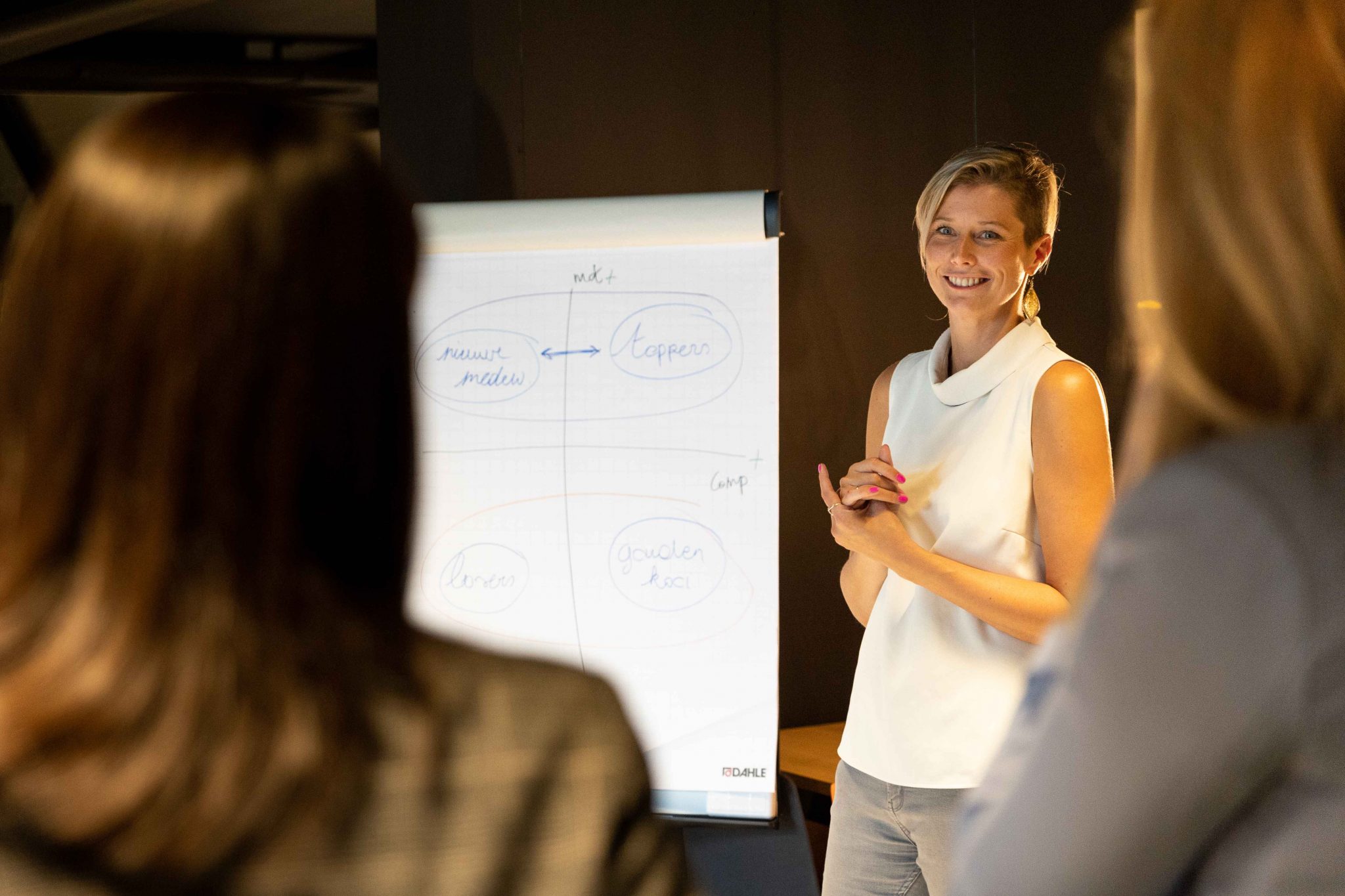
Lachende vrouw trainer 4Result Aranka Pieters
groep mensen die lachen bij een oefening tijdens een training van 4Result
3. A group of changemakers

Next, we jointly select a group of changemakers within the organization. These can be team leaders or team coaches, but it does not have to follow the hierarchy. They go through the exercise themselves first and later help facilitate the sessions in the rest of the organization. This way, the workplace hears from colleagues who already speak the same language.

groep mensen die lachen bij een oefening tijdens een training van 4Result
coaching conversation
4. Rollout in teams and branches

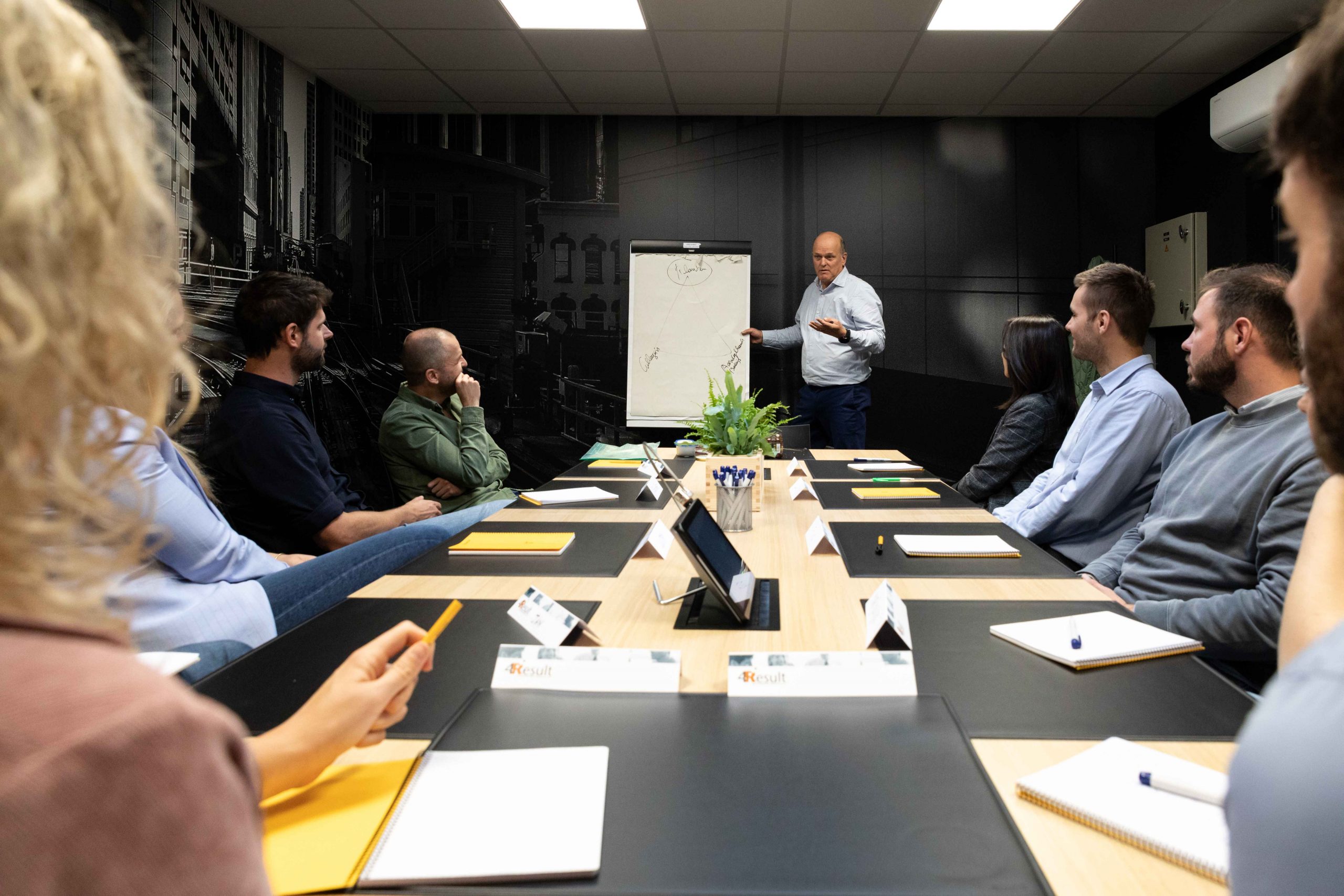
In sessions with teams or branches, employees in small groups of four to five people indicate where they believe the organization stands. The difference with the management's view is often the most instructive result. That is not anyone's fault. It is information.

notitieblok met nota's over coaching opleiding
group of people during training session with trainer 4Result
5. Actions and means

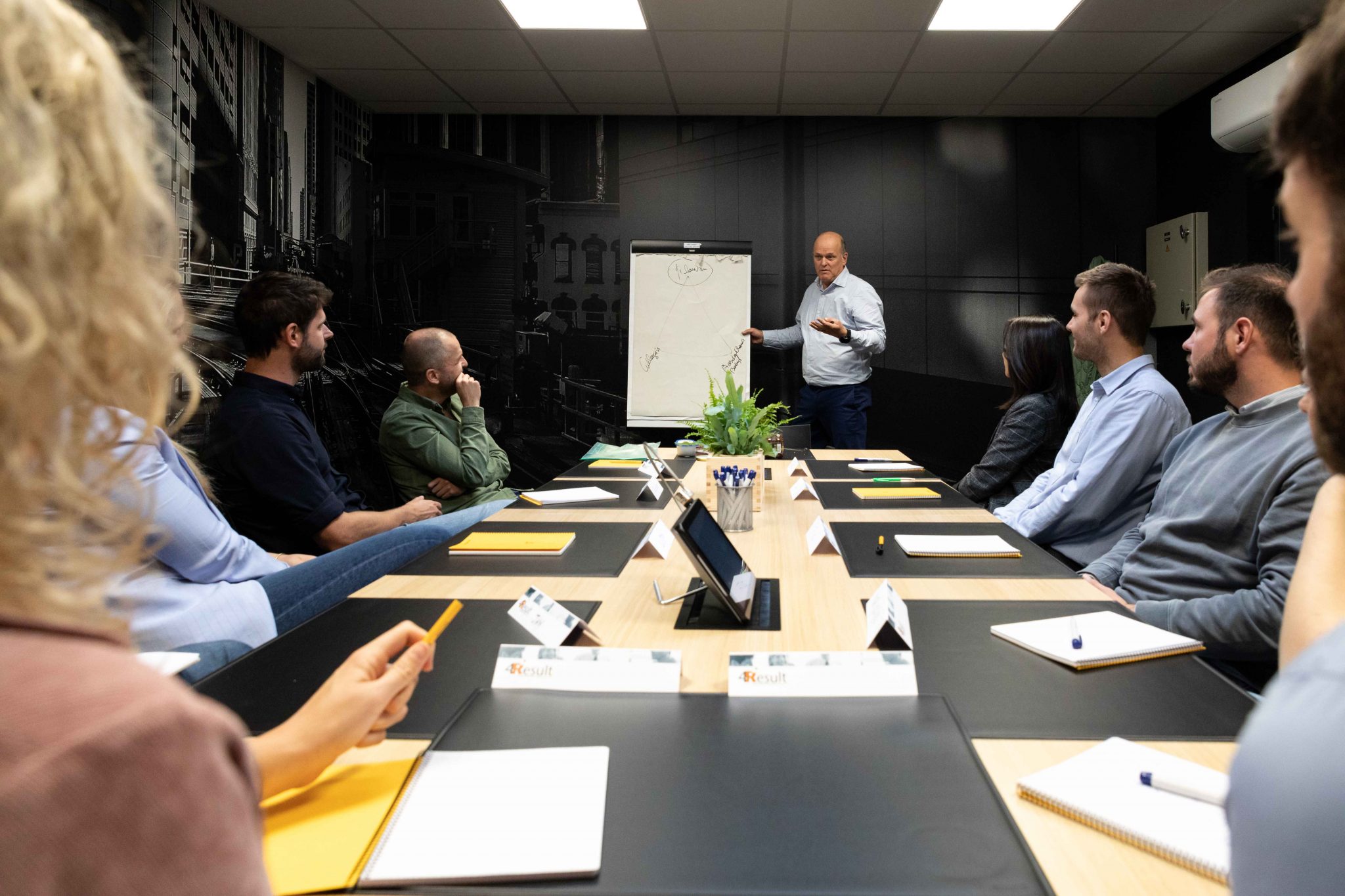
Only when the analysis and goals are clear do we determine the actions. Which two or three shifts will make the biggest difference? Who does what differently, from when, and how do we notice it? Then we look at the means: time, mandate, support, and where necessary, training and coaching for managers, team coaching, or field coaching.
group of people during training session with trainer 4Result

For whom?

For boards, HR, and L&D in larger organizations and larger SMEs, for example when:

        • training sessions are well-received but result in little lasting change;
        • there is a new strategy, merger, growth, or leadership change;
        • well-being signals, turnover, or absenteeism increase and no one quite knows why;
        • the organization wants more self-management or shared leadership and wants to know if the foundation for it is present.
years of experience
+ 0
people trained and/or coached
+ 0 K
years of loyalty from our clients
+ 0

Frequently Asked Questions

How long does a culture process take?

That depends on the size of the organization and the request. An initial scan and discussion with the top can be done in a few weeks. A full rollout across teams and branches usually takes several months. After the in-depth conversation, you will receive a realistic proposal.

How does the 4Result culture scan work?

We choose three to five axes with the client that are most relevant to you. The scan is filled in as a group: first by management, then by the changemakers, and finally in the teams. For each axis, the group determines where the organization stands today and where it wants to go. The model triggers the conversation, and that conversation is what it’s all about. You also immediately see where the views of the top and the workplace diverge.

Can you repeat the scan later?

Yes. After some time, the same scan can be filled in again. This allows us to see together which steps have already been taken and where there is still friction.

What is the difference with an employee survey?

A satisfaction survey measures how people feel. We look at how the organization works: how decisions are made, what is rewarded, and how management and employees each experience that. And the results are discussed with the people themselves, not just reported.

Do you always work with Laloux?

No. The model is a tool. We start with your question and then choose what helps.

Tell us what is going on

Let us know briefly what challenges you are facing. Dorien or Erik will call you back personally.

Testimonials

Our clients are our best ambassadors

Curious where your organization stands today?